Thursday, July 11, 2019

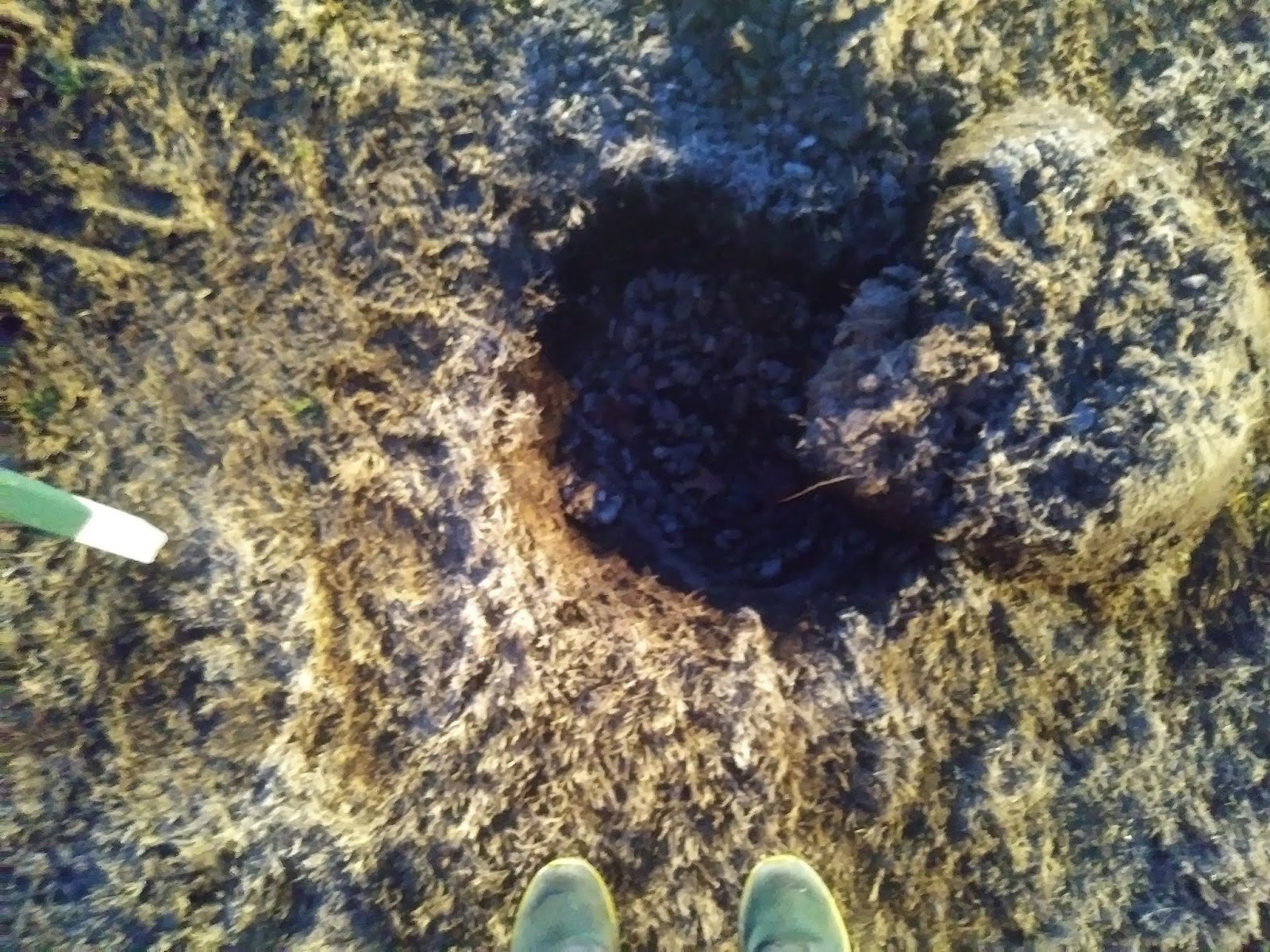
Spot Aeration to Weak Areas
This summer, we are looking to improve turf health in some of our weaker areas around the course. On Thursday, July 11th, we spot aerated weak areas in a few fairways and the rough on holes 11,13,14 and 17. These areas exhibited symptoms of compaction, and should respond well to the practice. The areas also received some supplemental fertilization to grow in from the process. All of the affected areas are circled with white paint to denote ground under repair, granting relief to golfers if their ball lands in these areas.

Wednesday, April 3, 2019

Successful Aeration
We are happy to report that we were able to beat the rain and complete our deep tine aeration to our greens. We incorporated quite a bit of sand into our soil profile, and have worked to further dissipate our buried layer of organic material. Recovery from aeration in the spring tends to be slower than fall, due to lagging soil temperatures. Fortunately, there is a warming trend over the next 5 days that leaves us optimistic that our recovery will be quicker than normal for this time of year.
A sight for sore eyes. Each year we break through the organic material that once impeded our roots, our greens get a little stronger. As a Golf Course Superintendent, variations of the photo shown above will never get old.
Not too bad of a playing surface while we recover from the process


New Tee Markers
Members will notice that we have once again changed our course tee markers. While we were happy with the look of our in-house built tee markers when they were initially put out on the course, we have been unable to satisfactorily weather proof them, to keep them looking good throughout the year. The new “Pool Ball” tee markers should offer us a more consistent appearance throughout the year.
Old tee markers looked good most of the time, but would be overrun with mushrooms after rainy periods
New "Pool Ball" tee markers will hold up better to the elements

Thursday, March 28, 2019

Improving Fairway Drainage
We are happy to report that after a couple very successful weeks of working on drainage, we have completed projects that will solve our issues with ponding on Fairways #3 and #7. While the drainage portion of these projects is complete, it will take us some time to get the trench lines back to playable standards, so in the short term, the trenching on these holes will remain ground under repair.
On #7 The Long Way is the Right Way
In our investigation of #7 we found  a pipe that already connected to the
drop inlet and were able to locate the pipe at the edge of the
fairway. This solid pipe was in great condition and easily flowed freely
 to the DI
When designing our drainage solution for #7 Fairway, we decided that rather than re-do drainage in the direction it was originally designed, we would take a longer path to the drop inlet near the green. The drainage was originally routed to the drop inlet near the cart path, which also happens to be positioned right next to a large pine tree. To avoid the tree and the havoc it can wreak on pipe, we took the challenge of a long run with minimal fall to help gravity work its magic. This required more time and materials to cover the length of the run, and also took more hand work to the trench to get the measurements just right. We believe that these extra steps will improve the longevity of the solution.
Sod harvesting began early the next morning
We then dug the trench with the back ho
The trench depth is meticulously manipulated to use gravity to our advantage
The pipe is laid and measured again, and then trench back filling begins
Phase 2 Extended to incorporate our bird baths toward the edge of the fairway
Sod is put back in place. Rolling and topdressing will help level out the trench line in the coming month
#3 offered us great fall, and a pretty straightforward run to daylight, which made it a far easier project than #7

Tuesday, March 5, 2019

Small Improvements Complete, Big Progress to Come
As the rain continues on into March, it seems like an appropriate time to update members on our progress with course drainage. To this point, we have only taken small steps to improve our drainage issues on the golf course. Little projects, such as running a new line of pipe from #12 cart path to the woods, and repairing the drain outlet to the right of #8 green, have been the kinds of small projects we have had the time to dig into. Much of our winter has been consumed with sand additions, and edging to our greenside bunkers. I am happy to report that we are closing in on finishing our winter bunker work. This progress should leave us free to dig into our key targets for drainage improvements. These areas include #7 Fairway, #3 Fairway, and #2 Fairway Bunker. While we may not be able to complete all of these areas, we hope to make significant progress in our goal to improve course drainage.
Smaller projects that can be completed in a single day have been very attainable in between our extensive bunker work this winter

#7 Fairway on March 5th

We have saved projects that may take more time and that could require dormant sodding until the end of winter, when we will be 
more free to give them the time and attention they need. We hope to get to as many of these areas as possible, but the weather can be an obstacle. Severe rain like the storm we had on Sunday, March 3rd, not only make these areas too wet to work in, but also create more work pushing up washed out bunkers when it does start to dry out. We will certainly be working hard leading up to spring to improve playable areas that hold standing water after heavy storms.
 

The wet weather we experienced in late February accentuated the increased drainage issue on #3 Fairway

Friday, February 1, 2019

What Do You Do On A Golf Course in The Winter Anyway?
Golf Course Superintendent's get this question a lot. Even though the grass isn't growing there is no shortage of work that can be done in the winter months. Here in the Tidewater, we are lucky enough to have a climate that is generally conducive to progress in the off season. Many members who have taken advantage of the mild winter we've experienced thus far, have already seen areas of progress, but not everything we do is immediately noticeable. Here is an inside glimpse into some of the things we have accomplished so far this winter, and an idea of some areas that we hope to positively impact in the coming months.
A big part of fall is spent prepping areas for winter, and this year we are increasing our efforts to reduce turf loss. We hope that this cover on #14 red tee, will help prevent what feels like inevitable turf loss to this tee.
The structural integrity of our pump house deck is all that separates our irrigation pumps from the wet well below them. This area can frequently accumulate rust and wear away over time. Repainting the deck, on an extremely rainy day prolongs the life of this valuable asset.
In the lengthy process of edging our bunkers this winter, we determined that the sand depths achieved during the Better Billy Bunker renovation may have left us with adequate sand levels when all sand is uniform in the bunker, but that the impacts of weather and regular maintenance make that a rare occurrence. For that reason we have accelerated our regular sand additions to give us a greater buffer to help maintain adequate sand depths. We anticipate adding a total of 120+ tons of bunker sand. This is a time consuming process, but will protect the improvements we have made to bunkers in the near future.  
Two years ago, we were thankful to receive capital investment from ClubCorp that vanquished our "lake" issue on the first half of #7 fairway. In the coming weeks we hope to begin in house work to fix the "bird baths" that have formed on the second half of #7 fairway.

There are many other areas of focus this winter that will help lead us into a successful 2019, but we hope you've enjoyed this peak into what winter is like working on a golf course. 


Wednesday, May 30, 2018

New Black Tee Box Constructed on #14
When the black tees where officially added to the scorecard a couple of years ago, #14 left us in a bit of a tricky spot. The current red tee box did not offer enough variety to shorten the hole enough and the fairway is far enough away from the tee, that the hole would then be too short from the black tees. As result the tees unfortunately ended up in the rough, which is certainly not a great place to tee off from. As promised, we have constructed a new tee box at the yardage designated for the black tees on #14. This new tee should also help improve the condition of the red tee box, by removing some of the traffic stress that the already shaded, weak tee has to endure. It may take a little time before our maintenance practices cause the tee to actually look like a tee, but we do hope to have the tee open for play sometime this summer.
After painting out the tee and orienting it in the proper direction, sod was removed in house and place in a previously prepped winter kill area on the same hole
Contractor came in to properly level the tee with a laser grade

The sod was laid in house. The tee has rooted and is ready for mowing and topdressing!


Thursday, May 17, 2018

Addressing Winter Kill/ Cart Exits
Despite a particularly cold winter, we are happy to report that we suffered a relatively small amount of turf injury out on the course. Bermudagrass can become susceptible to injury once temperatures begin to drop into the teens, and major problems can occur if the temperatures reach the single digits. Areas that go into the winter weak, or that are exposed to other stresses like cart traffic for instance, are the areas that are likely to die first. While we did see winter injury to #14 as we normally do, we believe that the off season Cart Path Only restrictions put in place, kept the damage to
 a manageable square footage.
Cart exit signs are designed to be a limit of where carts can use the 90 degree rule on a given hole, not as a designated exit point. Once hitting an approach shot to the green, golfers should drive their cart on the most direct route back to the cart path perpendicularly. The more golfers drive as far as they can up to the cart exit signs, the sooner we will have to move the signs further away from green to avoid excessive wear to the given area. Please keep in mind that cart paths are put in place to protect our course. By being aware, exiting before that last possible point, and training ourselves to utilize the cart path as much as possible, we can improve the condition of the course, and the golfing experience as a whole.


Thursday, March 29, 2018

Deep Tine Aeration Complete


On Tuesday we were able to complete deep tine aeration to our greens. As part of our aeration regiment, we have been deep tine aerating in the spring and aerating to a normal three to four inch depth in the fall. Varying the depths of our aeration allows us to incorporate sand at multiple levels in the root zone, ensuring that roots are not inhibited by a plow pan layer caused by aerating only at one depth. The result is deeper, stronger root systems, making the greens easier maintain, and most importantly, improving playing conditions for members throughout the golf season.
The front right of #11 is one of the more wet pockets on our greens, and therefore will benefit greatly from this process. This picture shows very clearly the layer that we hope to penetrate with deep tine aeration
Recovery from aeration at this time of year is highly dependent upon the weather. While the next few days will be warm, consistently warm weather is what we are hoping for to help bring our soil temperatures out the cold March weather we have experienced. Warmer weather should expedite the recovery process and allow golfers to get back in the swing of things, with no more greens aeration interruptions until September.

Thursday, February 8, 2018


Drainage Repair By #14 Green
The area to the right of #14 Green had a drainage problem that got progressively worse over the past couple of years. I am happy to report that we have resolved the issue, and the ground is already starting to dry out.We will cover the affected areas of the project with dormant sod in April. Next stop is #9 Tee Complex.
The completed drainage line will take water seeping out the side of the hill and move it to the sump right of the cart path
A tie line to encapsulate  a wet spot on the edge of the cart path


Wednesday, December 6, 2017

Addressing Drainage Issues
One of our biggest priorities this off season is addressing drainage issues around the course. We started earlier this fall by repairing drains in three of our more problematic fairway bunkers. We have also been troubleshooting our greens drain outlets as we edge and re-mark them. We have found that while the water is successfully making it's way through our greens drain systems, it is not always making it to the finish line. Fixing these issues will ensure that our greens drains flow freely and will also reduce wet areas created by clogged or poorly designed outfalls. Once we finish getting through our greens drains, and are further into the golfing off-season, we can dig into some of the bigger drainage projects we have targeted for this winter.

Water is run through our greens drain blowouts and makes it's way through the drainage system.
Generally, the water flows freely and the location of the outlet is simply re-marked
Sometimes though, the water doesn't make it all the way to where we want it
The repairs can be easy
And at times the repairs can become more complex. Either way, repairing these issues will help ensure the health of our greens, and fix some of the puzzling wet areas that can at times appear near greens.

Tuesday, November 28, 2017

Ball Mark Repair

Recently, we have experienced very mild and dry weather. Over the weekend quite a few members took advantage. High temperatures in the 50s and 60s are conducive to golf, but are not quite warm enough to keep our greens recovering as quickly as they do at other times of the year.  For this reason, we choose to emphasize the importance of ball mark repair at this time of year. Below is a photo of #2 green on the morning of Monday, November 27th. The orange flags in the ground show the distribution of unfixed ball marks. The panoramic image can be better viewed if clicked on and enlarged. 


That volume of damage can add up over time, negatively impacting the smoothness of the putting surface. Please assist us in keeping our putting greens at Greenbrier CC a source of pride, by staying diligent in finding and repairing ball marks on greens.

Wednesday, September 27, 2017

Greens Aeration
We topdressed our greens before aerating them this year, which
improved logistics, and resulted a lower impact from the weight
of the topdresser.
We are pleased to say that the aeration to our greens was completed last Wednesday, and the process went very well. Unlike last year, we were able to complete to process on its scheduled dates This will result in improved recovery time and an extended fall playing season for the membership. Each year we try to tweak our aeration procedures to improve results in any way we can. The process went the best it ever has, and the greens are already recovering quite well.

The plug puller actually helped start the incorporation of sand into the aeration holes before we even drug it in.

One week after aeration, and we are already well on our way to smooth putting surfaces


Working on Bunker Drainage
Pumping bunkers after heavy rains can be time consuming.
We start by investigating the cause of the issue.
Bunker drainage was greatly improved with completion of the Better Billy Bunker project two years ago. Some of the fairway bunkers that were not a part of the project still have poor drainage. This fall, before we reach full scale project season, we will be making the rounds to investigate issues with these bunker drains. This will not only improve play ability in these bunkers for the membership, but will also allow us to spend more labor in other areas of the course, that would have otherwise had to have been diverted to pumping out bunkers.

The issue causing poor drainage in the two fairway bunkers on #1 was not surprising. Severe root intrusion.

By cutting out the sections of pipe that were clogged or smashed by roots, we were able to restore working drainage to the two fairway bunkers on #1. We will continue to make our way around the course until we have no more bunkers that hold water after large rain events. Next stop....#2 fairway bunker.

Saturday, August 19, 2017


Drainage on #18
Throughout the course, there is no shortage of drainage work to be done. Every project we complete in house, or with contractors, can make a huge difference. Here are some photos of the work completed by contractors last week to the left of #18 green.

Area before project

Area before project
Area before project

Trench with gravel and pipe cuts off the water seeping out of the slope and take it to existing drains
Area is dried out and graded
Fresh sod to the affected area wraps up the project